Situated at the western end of the Dhauladhar range, Dalhousie was planned as a Sanitarium. The project for the formation of the Sanitarium in the Chamba Hills originated with Lt. Col. Napier, Chief Engineer of Punjab.
In 1851, selection was made of the spot and Dr. Clemenger was directed to proceed to the projected site to record the necessary observations on site. Dr. Clemenger submitted whose report in October 1852 and the sanction of the Government of India was given in September 1853. A Committee was then appointed to decide the boundaries of the proposed site and a reduction of Rs.2000 was made in the tribute paid by the Raja of Chamba out of the Rs.12000/- annually paid by him to the British. The Government of India sanctioned this in February 1854, and at the recommendation of Mr. (afterwards Sir Donald) McLeod, the sanitarium was called "Dalhousie". In 1856, Capt. Fagan was employed, under the order of the East India Company, in marking out line of supply and communication for the proposed station.
In 1866 it was determined that the barracks for the cantonment depot should be built on the Balun Plateau. On 25th July 1867, Dalhousie constituted a Municipality of the first class.
Grand View Hotel finds a mention in the history of Dalhousie and is one of the oldest Hotels here having been built in early twentieth century. Shri Laxman Das Chadha built it and it is still owned and managed by his family.
It is said that the best way to realize the situation of Dalhousie is to stand on Dian Kund, the highest peak in Dalhousie, at 9000 ft, where a magnificent panorama lies spread out before one. Facing northwest the Kalatop spur is on the right with the Dalhousie Hills Bakrota, Tehrah, Kathlug, Potrain and Balun stretching away towards the Ravi. At one time, on a clear day three great rivers Sutlej, Beas and Ravi could be seem glittering in the sunshine and losing themselves in the plains beyond, which seem to melt away into infinite space. Turning to the left one can see the lofty ranges of the Pir Panjal Range.
Dalhousie has managed to maintain a healthy green cover and the mountains are covered with Oak trees, Devdars, Pine, Firs and a variety of other trees and shrubs. The forests are full of wild life including Leopards and Brown Bears.
Dalhousie has played host to many luminaries and famous personalities such as Rabindranath Tagore, Pandit Jawaharlal Nehru, Subash Chadra Bose, Rudyard Kipling and His Holiness The Dalai Lama. Many Bollywwod movies have been shot in Dalhousie such as Ek Mahal Ho Sapno Ka, Himalaya Putra, 1942- A Love Story, Vajood, Dil Se, Gadar and Bhadai 'o' Bhadai. Hotel Grand View has had the privilege of hosting most of the film stars.
How to reach Dalhousie
- By Rail: Nearest Railhead are Pathankot and Chakki Bank approx. 80 kms away.
- By Air: Nearest Airport is Dharamshala. Amritsar and Jammu Airport, both 180 kms from Dalhousie, are convenient airports
Places on interest
Khajjiar (22kms): Also called as Mini Switzerland, it is one of the favourite sight seeing spots for visitors. It is a saucer shaped meadow surrounded by Devdar Trees with a lake in the middle. A little Golden Dome temple of Khajji Nag exists here.
Chamba (56kms): Chamba is the District Headquater and can trace its history back a millennium. It was the capital of the erstwhile State of Chamba which was one of the oldest principalities in Northern India having been founded in the 6th Century A.D. Chamba is famous for its Chaugan and temples. Most prominent of the temples is the Laxmi Narayan Temple (8th to 10th Century). The Bhuri Singh Museum replete with paintings from Chamba, Kangra and Basohli draws a large number of visitors.
Kalatop (12kms): Kalatop is a wildlife Sanctuary, an enchanting place where the thick cover of trees does not let the sunlight stream through. There is a level walk into the Sanctuary from Lakarmandi to the Forest Rest House
Diankund (17kms): Diankund is the highest mountain peak in Dalhousie and offers a panaromic view of Dalhousie, the Pir Panjal ranges and the rivers of Punjab. It is also famous for the flower valley and the Bohlani Mata Temple is situated here.
Chamera Lake (21kms): Also known as Bhadrakali Lake, it is the reservoir of the Chamera Dam and is also a boating point.
Bhalei Mata Temple: It is a revered temple for the people of Chamba District and is also called as Bhadrakali Temple. It is believed that the deity grants all wishes.
Sach Pass: Discover Rohtang in Dalhousie with snow throughout the year. It is a 4-5 hour drive and is the gateway to the tribal valley "Pangi" which is landlocked by mountains and shares boundaries with China.
Panjpulla, Karelnu, Subhash Bowli, St. Francis Church and St. John Church are some places of interest within Dalhousie.

 Fill up an
 +91- 01899 240760, 242823
 reservation@grandviewdalhousie.in

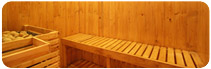
Experience grand living with various suites, deluxe rooms etc. Viceroy Lounge Bar, Conference rooms, Banquets, Internet connectivity & much more to your surprise.
know more

Some of your favourite stars were here, let us tell you the way they spent their time out here. We cherish the moments spent with them and wish for more star showers.
know more

- Oracle
- Hindustan Lever
- NHPC
- Power Grid
- World Bank
- Osram
- view all